
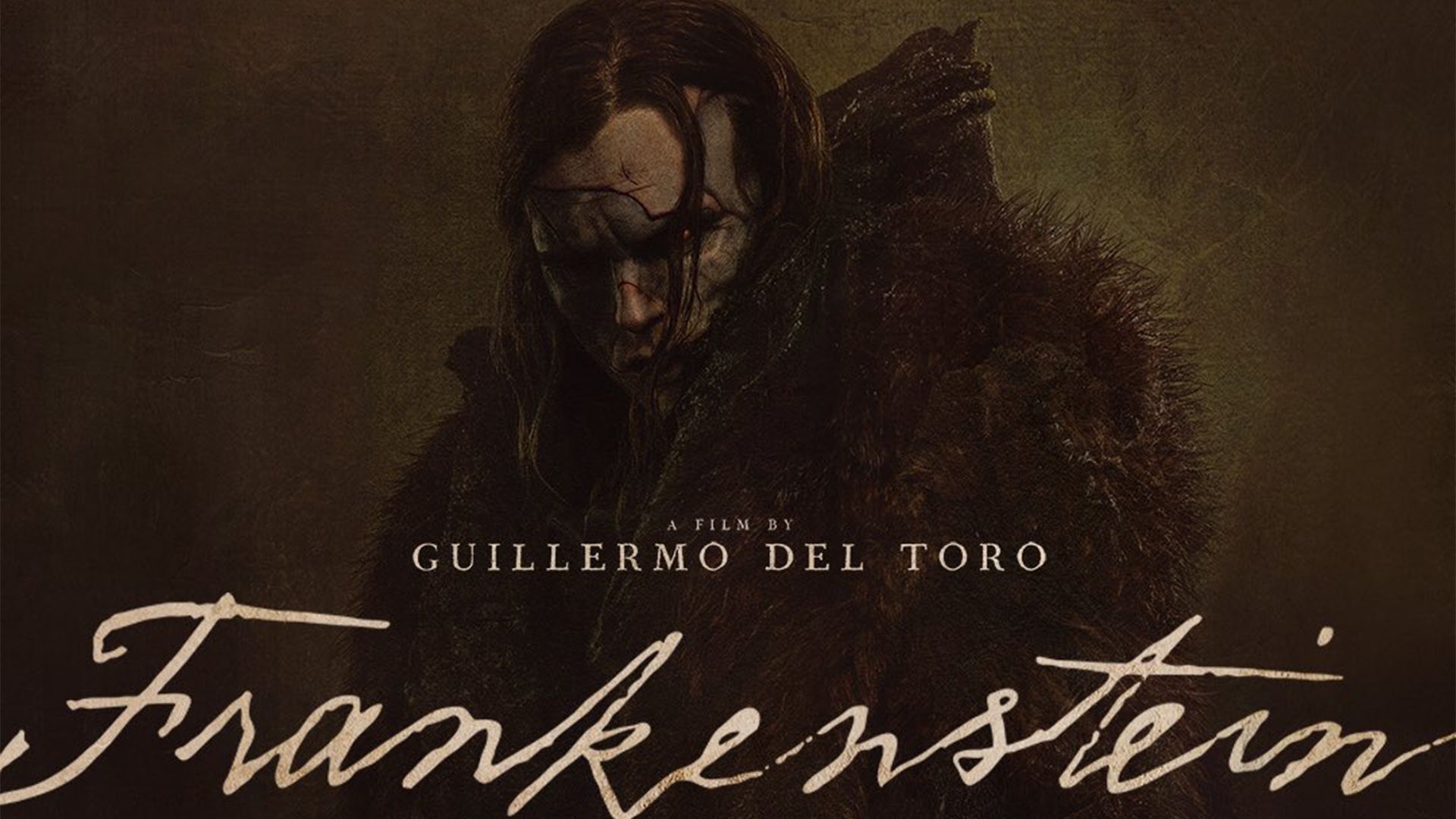
A review of Frankenstein, directed by Guillermo del Toro. Netflix, 2025.
Frankenstein (2025) – directed by Guillermo del Toro – is what I would call a $120 million dollar disappointment.
The film Frankenstein is based on the 1818 novel, Frankenstein, written by Mary Shelley. But I am not reviewing this film as an adaptation, as I have never read Shelley’s novel or have seen any other Frankenstein film before this. I was coming into this film with fresh eyes and no expectations, and yet, I was left disappointed.
The film is divided into two parts. Part One begins with Victor Frankenstein – played by Oscar Isaac – as he is rescued by a crew of shipmen and taken to their ship. Victor begins to tell his story to the ship’s captain… how it began when his mother died giving birth to his younger brother William – played by Felix Kammerer – and he became obsessed with death and the idea of immortality. On his search for immortality, Victor falls in love with William’s fiancé, Lady Elizabeth. The actress who plays Elizabeth, Mia Goth, also plays Victor’s mother at the beginning of the film (which was a choice that was made, but I digress). Victor ends up experimenting with dead bodies and electricity, with the help from a wealthy benefactor – Lady Elizabeth’s uncle, played by Christoph Waltz – and eventually brings life to his Creature. However, Victor soon becomes disappointed with his Creature as he deems it unintelligent and decides to get rid of it by setting his whole laboratory on fire. This really goes to show that Victor only thinks in extremes.
Part Two of the film begins with the Creature – played by Jacob Elordi – telling his part of the story to Victor and the ship’s captain. The audience learns that the Creature was able to escape the fire and went out into the wilderness. He sneaks into a house, where he discovers the goodness of humanity through a blind old man who treats him with kindness. After speaking with the Blind Man, the Creature goes back to Victor’s laboratory to discover more about himself. The Creature eventually learns the truth about himself as well–that he is an assembly of different body parts put together to create a new life–and that he is the only one like him in the world. The Creature goes back to the Blind Man, but there the Creature also learns about the evil of humanity when he gets attacked by the humans in the house just for the way he looks. After the Creature survives the attack, and discovers he cannot die, he decides to look for Victor in hopes of a companion. It doesn’t go well, as Victor doesn’t let the Creature, and tries attacking the Creature. However, Lady Elizabeth tries to protect the Creature and Victor accidentally shoots her. Eventually, Victor chases the Creature across the Arctic in hopes of ending his life. After listening to the Creature tell his story, however, Victor apologizes and begs for forgiveness. The Creature says, “I forgive you, Victor,” and the film ends with a beautiful image of the Creature walking into the sunset.
Now the film itself is visually stunning. Gorgeous. When Lady Elizabeth is wearing this beautiful white gown with just a simple red cross necklace, you cannot take your eyes away from the screen. Every part of this film is just stunning to look at. From the elegant costume designs to the simplistic yet lavish nineteenth century setting, the audience cannot look away. But because the audience cannot look away, they are quick to notice the red symbolism everywhere. And I mean everywhere. From the red dress and veil that Victor’s mom wears at the beginning of the film, to the red blood of a pig spilled on the street, to the red of the necklace that Lady Elizabeth wears; it would be difficult to not notice the red symbolism. Del Toro doesn’t just hold the viewers hand when it comes to this film, he spoon feeds the audience as well.

Since the red imagery is prominent and noticeable, when the camera zooms in on Victor Frankenstein’s gloves, of course the viewer is going to notice that his gloves are red. Rather if this is to illustrate that Victor has blood on his hands, or to foreshadow that he will have blood on his hands, doesn’t matter. The red imagery isn’t needed, the audience understands that Victor has blood on his hands, he literally goes to see criminals who are going to be hanged to see the quality of their bodies. But on top of the red imagery, you have the dialogue of the characters which goes out of its way to exclaim how terrible of a person Victor Frankenstein is. For example, after Lady Elizabeth finds the Creature chained up and hidden in Victor’s lab, she says straight to Victor’s face, “[…] only monsters play God.” It’s unnecessary and honestly demeaning to the audience. This is a film that is rated R, meaning only an audience of seventeen years or older are going to watch the film. So why are you treating your adult audience like they are unintelligent and cannot think for themselves? It makes for a very frustrating film to watch, because I don’t even have to think for myself. You will just tell me who’s the good guy and who’s the bad guy.
There are moments where the film does have merit, however. While I’m not a fan of the movie being divided into two parts, further emphasizing who really is the bad guy of the film, I do like that the Creature gets to speak for himself. By allowing the Creature to tell his own version of the story, we are giving the Creature autonomy. By giving the Creature a voice, the audience gets to learn that the Creature is really an intelligent being that is humane, and that Victor Frankenstein is wrong. The film would have been more interesting, and more terrifying, if it was only told from the perspective of the Creature.
Ultimately, there are good things and bad things about the film. The Creature having bodily autonomy being the best part, and the film is beautiful to look at. But, del Toro doesn’t trust his adult audience and instead treats us like we need to be spoonfed every single piece of information in this two-hour and thirty-minute long film. On top of that, the characters are also two-dimensional and lacking a personality. Which is why having to be spoonfed information is even more mind boggling. Like, was it not obvious that Victor is the bad guy in this situation when you made him out to be so comically evil, and yet you still had to throw the a dialogue line: “Victor, you are the real monster” as William Frankenstein’s dying words. Please give me a break.
The TLDR of it all is if you want to watch a visually stunning film where you don’t even have to think for a single second, then Frankenstein directed by Guillermo del Toro is the film for you.







Leave a Reply