
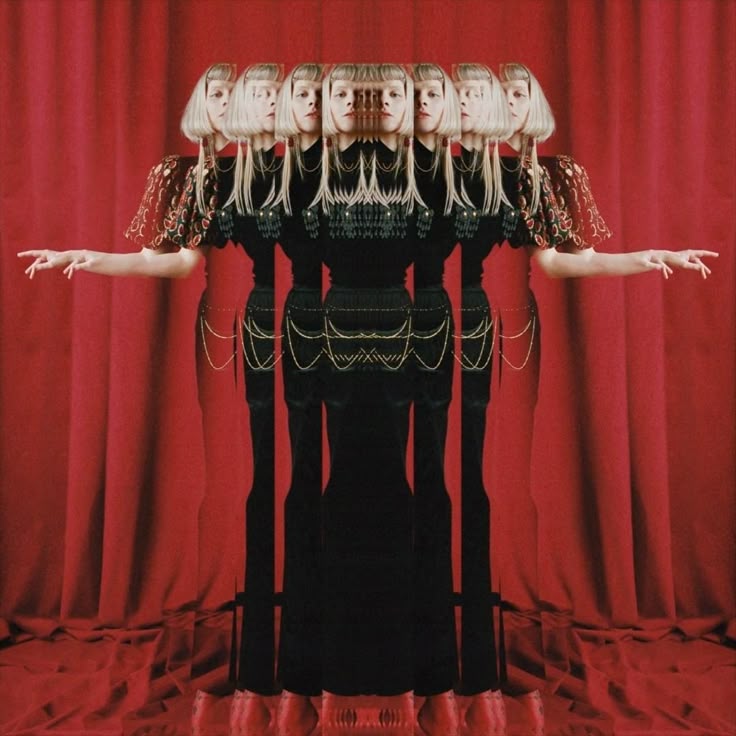
A review essay of The Gods We Can Touch by AURORA. Decca and Glassnote Records, 2022.
“[a] long time ago we seemed to feel like God was around us—in the ground, in the trees, in the water we drank—and therefore also in us”-AURORA
The palpable, flawed, and human characteristics of gods is the premise the fourth studio album by the eccentric Norwegian singer-songwriter, AURORA.
AURORA is an artist known for integrating direct political commentary in her art. In this album, she voices intense political and social issues (particularly exploring the historical injustices of religion and gender expectations and violence). She references Greek mythology, humanizing gods through the vivid emotions and expressions they represented to humanity during the zenith of such deities.
When it comes to musical production, this album is far from cohesive, but it works because, as AURORA puts it, “[The Gods We Can Touch is] pretty absurd. I think it has been a very absurd time, but also a good time that can remind us of a lot of forgetting in the chaos of the ordinary world. So it’s a bit like that absurd music, at the same time as it’s a bit cinematic,” (The Gods We Can Touch | Aurora Aksnes Wiki | Fandom).
That being noted, here are some of the tracks that stood out to me while I listened and relistened to AURORA’s The Gods We Can Touch:
“The Forbidden Fruits of Eden,” the first track on The Gods We Can Touch, provides an immersive introduction to the feeling of accessible divinity that AURORA is trying to convey. This song (echoing the feeling “Runaway” [2016] evokes in me) transmits a floating quality that inspires a feeling among listeners. Using soft and enveloping layered vocals, AURORA invites listeners of her fourth studio album to reflect on the divine and spiritual quality nature has to offer. By using each track to reference a Greek deity, AURORA is also contributing to this accessibility to what is godly.
“Giving In To The Love” is a captivating piece due to it’s overwhelming percussion and vocals that seem distant at first before drawing closer, further inviting listeners into a world of hope as the drums intensify. Within this song, AURORA sings, “But everybody cries and nobody comforts / The television lies and now my mind hurts.” These lyrics seem to advocate for an overcoming of the apathy this author sees in the media, and the passive witnessing of the unsettling events that happen and upset the public on a regular basis. The later line, “If I’ll be somebody, I’ll never let my skin decide it for me,” resonated deeply with me, and although it is simple and may seem too surface level, it still holds an immense impact (Give Into The Love 0:42).
“Cure For Me” stands out for me the most, mainly due to its lively, videogame-like production. The synth sounds within the song add a brightness and dynamic characteristic that reflect a colorful resilience of the issue the song discusses: religious opposition to queer and trans individuals. The lyric “the moving heart I got” caught my attention since I thought it was a great interpretation of the rejection to conform to the strict, static standards for sexuality and gender expression that are often preached by extremist religious institutions (Cure For Me 1:29).
“Exist For Love” released in 2020 as a single for the, at the time, still-vague potential fourth studio album. This track has a more organic production, beginning with soft vocals and acoustic accompaniment. The light drums that follow this simple beginning intensify slightly and enhance the captivating quality of the love the lyrics describe without overwhelming or overpowering the rest of the melody. Lyrics like, “And then you take me in/ And everything in me begins to feel like I belong / Like everybody needs a home” and “And then I learned the truth / How everything good in life seems to lead back to you / And every single time I run into your arms / I feel like I exist for love” elevate the force of love in the world and celebrate it, and the wholesome quality of the words match perfectly with the determined softness of the production and vocals (Exist For Love 0:39, 1:12). It just seems to embody a wonderful and sincere type of love.
“Heathens” was defined as “an ode for women” by AURORA for Apple Music (flamingplay). The biblical imagery in the chorus allows the speaker(s) of these lyrics (women) to reclaim the negative connotation behind myths that villainize women. “Heathens” is full of lyrics such as,
That is why we live like heathens
Stealing from the trees of Eden
Living in the arms of freedom
And everything we touch is evil
That is why we live like heathens (Heathens 0:37)
These lyrics embrace these misconceptions about the feminine and shift it into a proclamation of power. There is a drastic change in instrumental after the bridge, its transition to a percussion-filled melody that drowns the backing vocals almost entirely is something I really enjoyed (even more as it shortly resumes back into the chorus). The instrumentation creates a more poignant ending.
Similarly to “Heathens,” the ending of “The Innocent” differs greatly from the initial sound production. The track begins with a lively ragtime piano and incorporates percussion as the chorus draws nearer. The layers of sounds during the chorus are overwhelming in an invigorating way. The lyrics seem to match the rhythm. Referencing Eros, the Greek god associated with carnal love, this track, with lines like: “The innocent life, the innocent touch is never enough,” explores the dangerous way in which innocent aspects of life, such as human bodies and nudity, are quickly sexualized (The Innocent 0:40). I believe that this corruption of something so natural is what creates hostility in our world, which highlights the hypocrisy of conservative religious institutions that preach purity to the point of demonizing natural aspects of human life.
“Exhale Inhale” with the leading simplicity in its production and more minimalistic vocals that build up in a call and response effect. There is an initial a capella humming, followed by an effect of synth plucks that leads into the layered backing vocals build an entrancing environment, which immediately attracted my attention. The instrumental slowly builds an effect that–when combined with the angelic layers of vocals–produces a floating feeling. This is an immersive track, entirely relaxing until its dissatisfying and abrupt conclusion that feels like being startled out of a pleasant dream.
“Temporary High” was the sixth single for this album, a choice–I presume–has to do with AURORA’s determination to demonstrate the album’s variety of sounds in advance to its release. This is a wonderful track with an overwhelming production reminiscent of that of the signature 1980s synth instrumental. This track has an effervescent quality that fits the jovial feeling of the overall album while also contributing to the absurdity of album. It reminded me of Bonnie Tyler’s “Holding Out for a Hero” due to the quick buildup into the chorus, which fits the narrative of the lyrics that describe an uncontrollable woman who, according to AURORA, “if she was your present, she would be confusing; if she was your past, you wouldn’t be able to escape her. If she is your future, you won’t be able to keep up with her” (Apple Music). It reminded me of a manic pixie dream girl character.
Overall, I enjoyed this album. “Giving In To The Love,” “Cure For Me,” “Heathens,” and “A Temporary High” have officially transitioned into my regular playlist, and I expect they will stick around for a while. The production of this album is not entirely cohesive, but I think that adds charm to it. The consistent part in the instrumentals is percussion, which I think is an Aurora signature, as she has said she loves to add drums to her songs. The Gods We Can Touch is a very AURORA project, if that makes sense, and I am glad I finally listened to it in its entirety!






Leave a Reply