
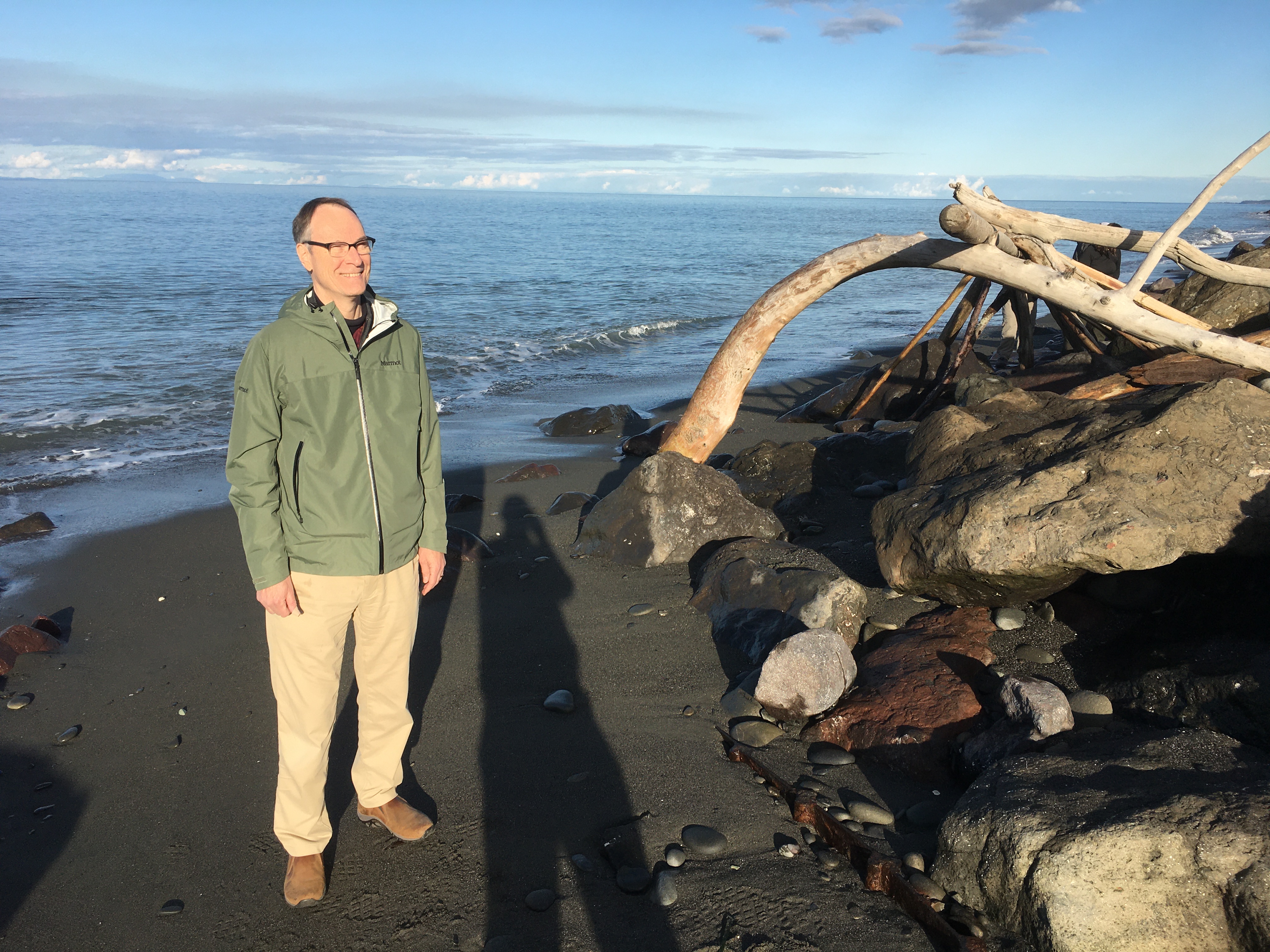
Andrew Cripe is an English Grad Student at Western Illinois Univerisity; his thesis is about trauma representation in storytelling and whether it’s accurately depicted. Additionally, he teaches ENG 180 and works in the University Writing Center.
…reading sort of evolved into meditation, and it became easier to accept who I am versus what I’m not…
Andrew Cripe
M&L: What genre makes up most of your collection?
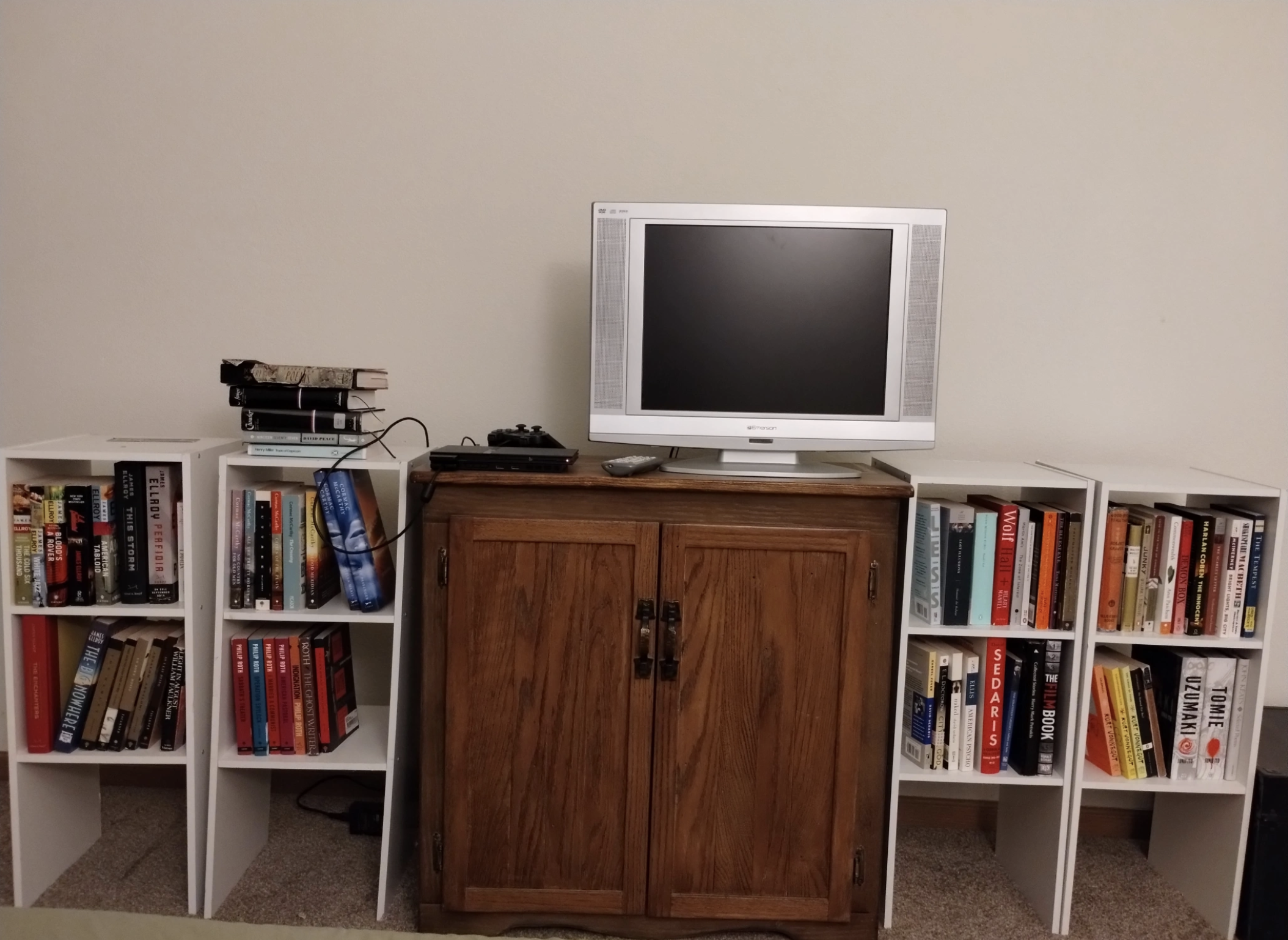
AC: I think if aliens abducted me from my apartment the search party would look at my collection and think multiple people with vastly different personalities lived here. I just really like to read. At a glance, I am noticing a lot of crime, history, and literature written in the 20th century onward.
M&L: Which book is your favorite?
AC: I love so many books, but I’ll give you the name of one that best encapsulates the kinds of experiences I yearn to have from fiction: Blood’s a Rover (2009) by James Ellroy. I think if I could read books similar to that for the rest of my life I’d be a very happy person. It is long, brutal, challenging, emotional, and super immersive. It is the finale in a trilogy of epic historical crime novels, bouncing between real figures and some fascinating anti-heroes.
M&L: How long have you been building this collection?
AC: When I got my driver’s license as a teen I would spend all my free time in bookstores and libraries. Around the time I started living alone, I realized I had space for books. My mom bought me the two big shelves you see in the photos, and it took years for me to run out of space. I’d say the size of my collection started to be noticeable to the people who’d visit me around 2018. After that point, every time I moved there would be the dread of breaking down my shelves and lifting insanely heavy boxes (part of the reason I practice weightlifting is to prepare for my next move).
I am both careful and impulsive with what I purchase. Some books are from an author I love, and some (as weird as this will sound) sort of reach out to me, like I’m their last chance at existing. The majority of the books you see on my shelves are used. I have a soft spot for books that look forgotten or discarded, especially the ones that are left outside stores in the discount-carts or on sidewalks in those little-free-library things that look like birdhouses.


M&L: Which book have you had the longest?
AC: That I bought as a teen, Tinker Tailor Soldier Spy by John Le Carre, or The Heart is a Lonely Hunter by Carson McCullers. For Christmas presents around the same time, my mom got me collections of John Updike’s short stories and the complete poems of e e cummings.
M&L: Which book have you gotten most recently?
AC: For my Kindle, I recently bought Living in the End Times by Slavoj Zizek. To add to my physical collection, I’m waiting for David Peace’s GB84 to arrive in the mail.
M&L: Which is your favorite fiction book?
AC: My answer changes daily. Suttree by Cormac McCarthy, Tropic of Capricorn by Henry Miller, Something Happened by Joseph Heller, and Crime and Punishment by Fyodor Dostoevsky are some that dance around in my head. For authors that just constantly knock me out, I think Philip Roth has the most novels that I love. If I had to choose just one of his, that would be extremely painful, but I’d likely choose Sabbath’s Theater or Operation Shylock.
There’s also Stephen King, whose novels have really kept me company throughout the years. The late Paul Auster really kicks ass. I think Don DeLillo, Denis Johnson, Dorothy Allison, and E.L. Doctorow are great storytellers. Hubert Selby Jr.’s Last Exit to Brooklyn will haunt me to the grave. Likewise, Richard Yates’ Young Hearts Crying, which is like the great American novel if your parents are divorced. Laszlo Krasznahorkai and David Foster Wallace constantly leave big impacts on my idea of what a novel can actually look and sound like. Some more recent novels that I think are extraordinary are The Passenger by the late Cormac McCarthy and Innocents and Others by Dana Spiotta.

M&L: Which is your favorite nonfiction book?
AC: Andrew Solomon’s The Noonday Demon: An Atlas of Depression changed my life. After years of shame and social stigmatization about receiving mental health support through antidepressants, Solomon helped me accept and forgive myself for what was happening in my brain. It’s also just an astonishingly ambitious catalogue of human experience, combining the autobiography of Solomon’s lived experience with the oral histories of many brave victims of horrific events. If mental health is an important subject in your life, you must read it, and if it isn’t, then this book will change that. For a runner-up, I was very moved by Karl Ove Knausgard’s series of memoirs, My Struggle. That obsessive, all-consuming journey through his life glows inside me whenever I remember it.
M&L: Which is your favorite poetry book?
AC: The Selected Poems of John Ashbery, along with the Library of America collection of his work from 1991-2000. He’s the one in my collection I think about most. I’m currently working my way through Louise Gluck’s Poems: 1962-2012. I also love my copies of Keats and Longfellow. Bukowski’s Pleasures of the Damned is also a ton of fun.
M&L: What makes your library/bookshelf unique to you?
AC: I can tell you where I was when I bought all of them, which is why I’m reluctant to order books online, because a similar magic isn’t possible with that method. Bookstores and libraries are the most important places on the planet for me, and my collection brings me a similar level of comfort. I have not read all of them, but finishing one and exploring my shelves for the next is a joy.



Leave a Reply