
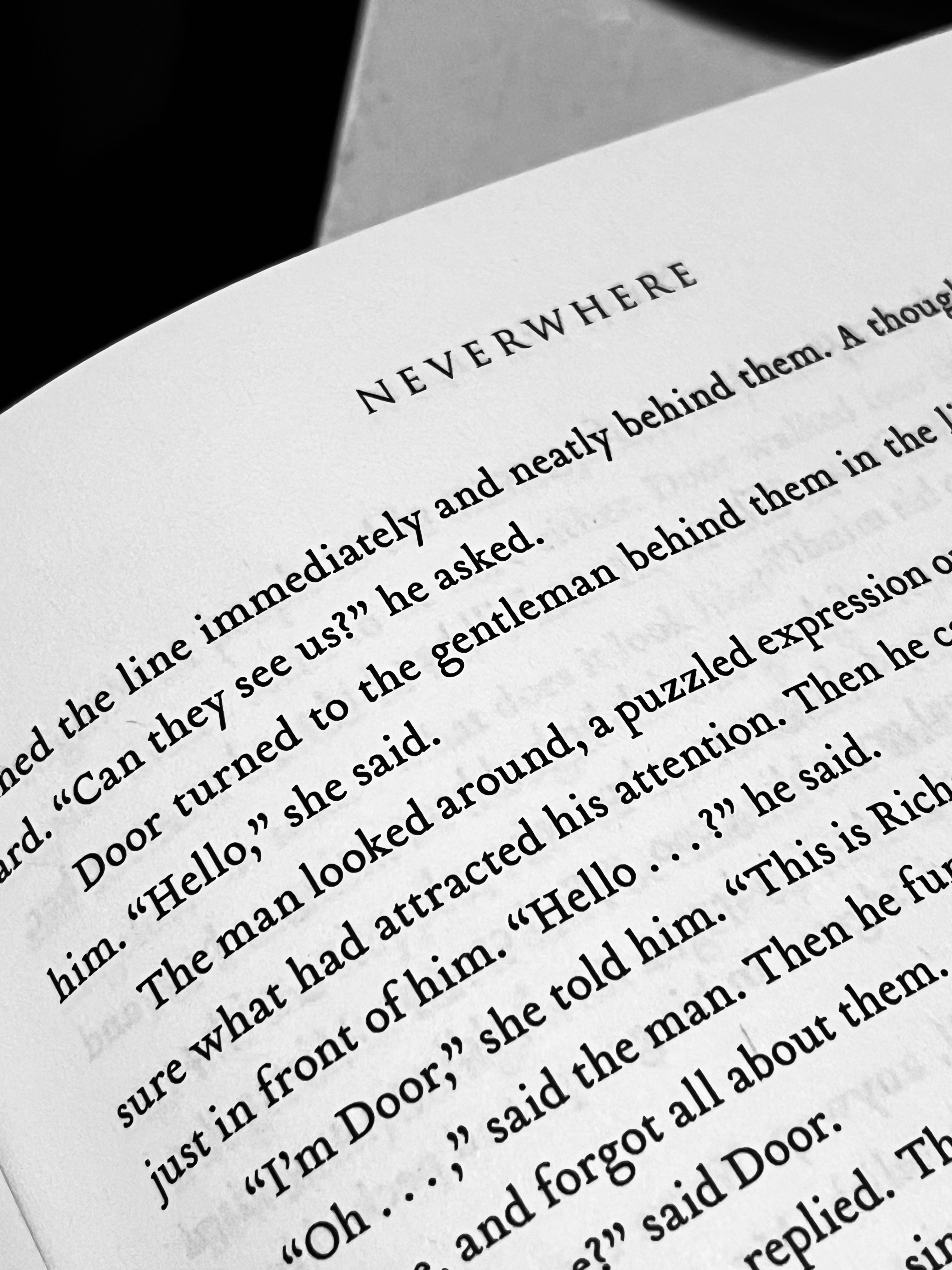
There is a kinship that approaches the sublime when two people discover a shared love for a particular work of art. That bond can be deeper than ordinary attraction. For me, the book which sparked this bond was Neverwhere by Neil Gaiman.
In the spring of 2004—over twenty years ago now—I was finishing high school. I was dating a girl who had traveled across Europe, including the UK (more than I had at that age). She brought with her a love for British culture that enchanted me. She introduced me to bands like Muse and Travis, to odd little films like Six-String Samurai, and, ultimately, to Neverwhere.
Neither of us owned the book. We checked it out of the school library in turns, devouring it and then returning to it. Each of us convinced that some part of our own story was hidden between its pages. We imagined ourselves in the shadows of London Below, sharing in the adventure.
My attachment grew until I did something I would not endorse: I slipped that particular copy of Neverwhere under a gap in a side door, into my bag, and gave it to her. Our relationship did not last long, but that book still feels like a relic of a time when stories could draw two young people together across the uncertainties of entering adult life.
In recent years, troubling allegations have been raised against Gaiman, and my opinion of him has changed. I feel the same pang of disappointment many readers do when the image of an admired author is clouded by reports of personal misconduct. I am left wondering—not for the first time—how to hold in balance the art that once moved me with the moral questions that now hover over its creator.
I do not have a clean answer. Perhaps what remains is the memory of the reading itself: a book passed between two teenagers, a shared spark of imagination, and the reminder that literature can open doors—both to the world of a story and to another human being.



Leave a Reply