
Recently, I was challenged to consider the balance between authentic artistic expression and the too-often toxic platform of social media. I confess that I am still navigating the balance between engagement and toxicity. While discussing, I will limit this discussion to Instagram, for that is my preferred social media platform at present:
I was once more active across social media platforms. I had TikTok, Instagram, and Facebook. I used them for personal sharing, rather than promotion. But life changed, and so did my desire to add to the exponentially expanding mass of human media, so I deleted my social media accounts. Then life changed again, and I needed an outlet of some sort that involved community—even if it wasn’t initially appealing to me. My assumptions were challenged as I encountered more and more people who, like me, were navigating the desire to express themselves with the addictive neuro-chemical consequences of “engagement.”
At first, my goal was to use Instagram to share time-lapse videos more efficiently with a select group of people. The more I did so, the more people took notice. I relapsed into a past habit of mine: tracking metrics as a form of self-validation. I began to subtly experiment with refinements to my posts to get that “validating high.” As my account had always been relatively small, and my sensibilities were more centered on retention and depth, my flavor of content wasn’t always to the algorithm’s liking. There were a few posts here and there that “went viral” compared to what I was used to seeing in responses, but, for the most part, it was just the same set of people who had taken a passing interest.
The more time I spent in this slow evolution of content design and focus on engagement, the more I began to see that the steps I’d need to take to reach more people were simply not feasible for me. I’d have to settle for the responses I received naturally, as promotion didn’t feel right to me. Part of that anti-promotion thought was my own opinion that what I shared just wasn’t that interesting to most users. “Okay. So what? If I want more engagement, I’ll just have to create more interesting material.”
At the time, I had just entered the online poetic community, which, like any population, contains a diversity of users. It seemed to me, in those early days, that so much attention was given to the cheapest, most vapid writing I’d ever seen. Fortune cookies had better poetry than some of the rubbish I was reading. Perhaps that makes me a pretentious snob, or maybe it’s just that I enjoy art that has more depth than a thimble. Whichever is the case, I began to write in quiet rebellion against the pervasive three-second attention span perpetuated by the algorithm. I wanted to write pieces that made people stop and think—to observe the craft as meaningful—rather than as commercial.
This position has shifted, and I now take a gentler, more balanced view of the poetry I see in my feed. The poet’s mindset on social media becomes less about a celebration of discovery and more about achieving a means to an end. I’m guilty of deep dives into the metrics of performance as a measure of merit. But a poem is not valuable just because hundreds of people might read it. Instead, merit comes from impact and authentic expression. I decided to focus on writing poetry which could inspire affect, rather than simply being accessible. I experimented with a variety of different poetic forms, observing the reactions to see if my true intent shone through, and, like the diversity of users, I received a diversity of responses.
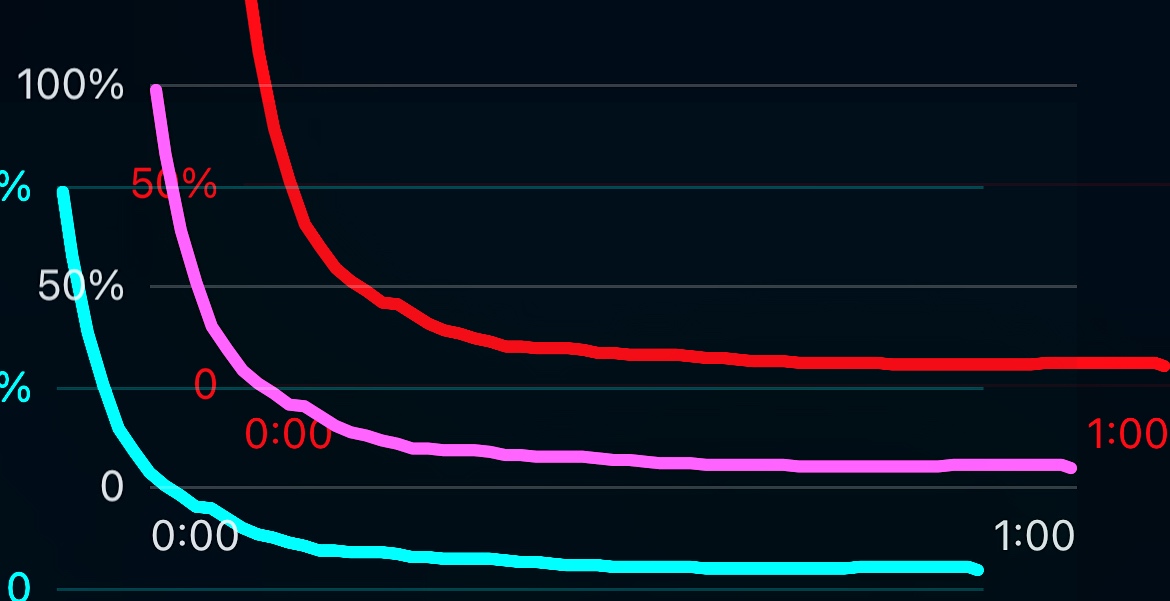
I don’t see anything wrong with working within the constraints of a platform to achieve an affective end. But I do see some people take it too far or too personally when their work doesn’t perform as well, and finally succumb to the withdrawal and pain of unmet expectations. If you place value on how others respond to your work, rather than on the work itself, then you’ll never be happy on social media. The landscape and culture are far too easily swayed by fashion and trend to form any sort of consistency. Every second, the preferences shift. The algorithm is nothing more than a set of decision trees. If a post receives strong retention metrics in a specific timeframe, then the algorithm pushes the material to more users. It rewards and encourages the same attention-deficit, passive-scrolling culture that I work so hard to undermine.
Let’s face it, an algorithm can’t decide if your work has value. We think of it as a black box with a judgmental little mystery machine inside. But it is just an evolving set of code. It has a built-in logic that seeks to meet specific quotas and metrics of its own. It is a culture-shaper of sorts, but it is blind to real human experience. If you were to take your collected works and present them to a random selection of people, you’d still find the same statistical distributions of engagement—roughly bell-curve shaped. But those readers would have the space to set aside their three-second mindset, which, unfortunately, has become more common outside of social media than ever before.
We do not place the same sort of value on human achievement as we once did. What does that say about our culture? So much of our mental faculties are being outsourced to machines. There are benefits and drawbacks. We gain efficiency but lose the ability to make independent decisions. This leads to an insecurity surrounding our own experience; our ability to trust ourselves is greatly diminished in today’s culture. Thus, I write poetry to challenge this structure. I write with depth to place a small counterweight on the scales of a world that lives in three-second bits of overstimulated content.
I take a step back when I look at my feed, taking in the various ads for digital editing apps as well as AI image, music, and video generators (brands that sprout up overnight to hustle some new gadget). Yes, there is a strain of toxic consumerism which borders on wanton exploitation and deception, but it is our own responsibility to look beyond the feed. We must look at social media platforms as opportunities to subvert the current attention-deprived culture we live in and hijack the vehicle for our own creative ends. Yes, there are trends that we come up against and play the comparison game—but that’s just like a hairstyle in middle school. You’ll look back at the ways you went along with the trend years later and kick yourself for how stupid your yearbook photo looks.
But rather than advocate for a harsh move against the stream, I would remind readers that social media is like a current—you don’t swim against it, you swim parallel to it so that you might create space for small movements towards the shore of your intended goal. In this way, I look back on posts I shared that tried to go along with now-outdated trends, and I see them as steps toward a mindset where I look at the work with measured expectations. Poetry, in particular, is an incredibly vulnerable and personal practice. Often, we use it as a means to express what we would otherwise not share. Does that mean that we should just open ourselves up and have no filter about our inner lives? Absolutely not! It means that we need to be careful with what we share, to be respectful, and to measure our words with the understanding that social media can be welcoming but also cruel. We must set limits within our own minds as to how much of our own worth is tied up in the electronic validation of human and machine.



Leave a Reply