
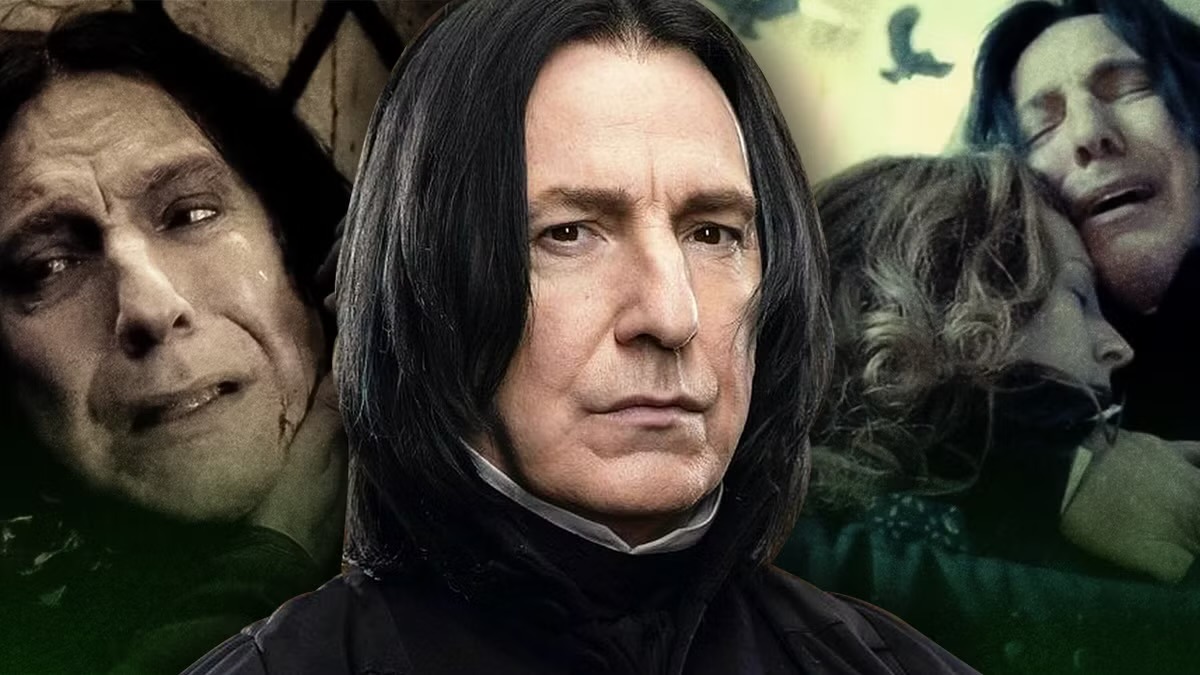
When an author suggests that a character is “morally grey,” they imply an ambiguity in the moral motivation behind the cruel and unusual actions of their characters. It is easy to write a villain whose aims are almost entirely self gratifying, but it is even more difficult to orchestrate a tragedy that is complex enough to spark such wide debate amongst readers even years after its publication. JK Rowling’s Harry Potter and the Deathly Hallows was released in mid-July of 2007, and, eighteen years later, the “Potterhead” fanbase still debate one of literary history’s most controversial characters: Serverus Snape, the Death Eater, double spy, and the “hero” who ultimately died for the greater good. Whilst I offer no objection that there are some plausible causes to the choices made by this, there are a dozen alternate reasons I could list that could debunk any justification that one might provide to ultimately prove that Severus Snape is not a good character. However, for brevity’s sake, I will only offer three.
THE “MUDBLOOD” INCIDENT
Throughout the series, the dreary details of Severus Snape’s childhood are revealed as an attempt to garner sympathy. He grew up a lonely, impoverished and introverted child, watching his magical mother endure abuse from his muggle father. Snape took refuge in the first friend that he made at around ten-years-old: Lily Evans (the future mother of Harry Potter who would give her life for her son and would shape Rowling’s narrative)
The two become best friends and relied on each other to navigate the mysterious halls of their magical school until their legendary falling out during their fifth year (when years of animosity and arguments boiled over with one word: mudblood—the insult aimed at witches and wizards who were born to non-magic parents). Someone whose bloodline is considered to be contaminated simply because they do not come from an uninterrupted line of magic like others around them. A minority. The fact that Lily was “muggle-born” (the polite term for one who was born to non-magic parents) did not pose an issue until the Hogwarts school sorting, where students are separated by houses based on their personality. Lily ended up in Gryffindor, where she prospered among the brave and the bold, and Snape went into Slytherin, where he fell under the influences of the ambition and cunning of his peers. Despite begging from Lily for Snape to give up his obsession with dark magic, nothing occurs; ultimately during an altercation that ends with Snape calling Lily a “mudblood,” the friendship between these two characters ceases forever
THE “PROPHECY” INCIDENT
The entire foundation of all seven Harry Potter books narrows down to one moment: a prophecy that was given by a Seer (a witch or wizard with the ability to read the future), warning the world that there would be a child born at the end of the July that would eventually bring an end to Voldemort—the main antagonist—once and for all. A prophecy that would have never been made aware by Voldemort had it not been for an eavesdropping Death Eater (Severus Snape) that would run back to tell.
Not only did he choose to join a magical mafia dedicated to targeting the minorities of his world, but his decision to tell Voldemort what he overheard triggered a series of unfortunate events with cataclysmic consequences: paranoia, chaos, destruction, and the cost of many innocent lives. It was not until Lily Evans was at risk that he felt the need to grow a conscience that ultimately remained selective. In chapter thirty-three of Harry Potter and the Deathly Hallows, “The Prince’s Tale,” readers learn that while Snape had begged Voldemort to spare Lily’s life, he was also more than willing to allow her husband and child to be slaughtered so long as she lived. In the same chapter, even Dumbledore expresses his disapproval:
‘You disgust me,’ said Dumbledore, and Harry had never heard so much contempt in his voice. Snape seemed to shrink a little. ‘You do not care, then, about the deaths of her husband and child? They can die, as long as you have what you want?’
What some call “romantic” or even “bittersweet” had instead struck me as an act of selfish desperation rooted in an ignorance that bluntly states: “I don’t like when my actions have consequences.”
A “man” who willingly joined an organization with a goal to genocide the muggle-born population and somehow thought the woman he claimed to love would be the exception to the rule has to lack the critical thinking it would take for “morally grey.”
THE “BOGGART” INCIDENT
Part of Snape’s character, as noticed by the fandom, is his resentment. Snape is full of resentment; he ruminates in it. When the prophecy said that there would be a child born at the end of July that’d eventually bring an end to Voldemort, it wasn’t just Harry Potter that had the potential to be the Chosen One, but another character by the name Neville Longbottom.
Voldemort’s choice to confront the Potters instead of the Longbottoms is imagined often into another reality where the alternative happens. Not just by the fanbase but by one character as well. Since the very first book, the only child that Snape targeted as much as Harry, was Neville. His recorded hostility toward Neville (for example, forcing him, as a child, to poison his pet for messing up an assignment) over the span of seven books is exceptionally unnerving and it could only be assumed that it is due to his inability to place blame on the dead for his self-induced trauma. In Snape’s mind, Neville is a justifiable target simply because he isn’t dead. This leads to Snape being Neville’s greatest fear above all else.
A “Boggart” in the Harry Potter Universe is a fictional creature meant to take the shape of the thing you fear most, as revealed in chapter seven, “The Boggart in the Closet,” of the third book, Harry Potter and the Prisoner of Azkaban. Neville is forced in front of one during a Defense Against the Dark Arts lesson, and, instead of shapeshifting into any of the fan base of dangerous creatures that lurk in the mysterious corners of the wizarding world, it instead turned into Severus Snape. Neville’s boggart turned into the teacher that had caused him more emotional disturbance in just three years than a lifetime of watching his parents linger in a hospital without their minds.
CONCLUSION
Morality–most of the time–is neither all black or all white, but is many different shades of grey that vary between light and dark, just like people. To me, Severus Snape does not fall into any of these categories. Not all black, not all white, but certainly not grey either. His childhood was a sad one, but not sad enough to justify his participation in discrimination and genocide. His actions had motive behind them, but typically for personal gain and not for the well-being of anyone else. He died for the right cause, but not because he regretted the hand he had in the suffering of thousands during the war, it was due to the revelation that the cause he was initially fighting for affected him personally. If death granted atonement to everyone who only realized their mistakes when it was too late, then everyone whose last words are an apology would be called a hero. If cruel actions are done without a justifiable cause, could it still be considered morally grey?


Leave a Reply