
Heated Rivalry (2025) is a TV show created by Canadian actor and director Jacob Tierney. It is an adaptation of Rachel Reid’s Game Changer series of romance novels. The show follows fictional hockey stars, Shane Hollander and Ilya Rozanov, in their steamy interactions, and the profound emotional connection they form throughout their hockey careers.

As of now, I have not read any of the books, but if their level of wholesomeness mirrors or exceeds the TV adaptation (which is often the case), I am sure I will have an incredible time. Now, apart from the Adonis-like physiques of the actors who feature in this show, the stupefying chemistry between the two main couples in the story, and the compelling fact that “it was made with two dollars and a dream” (as some TikTok users like to mention), Heated Rivalry is also impressive because of the undeniable and overwhelming feeling of hope it transmits.
The Heated Rivalry TV show and the previously-mentioned Game Changer books are more than boy-love smut. They offer truly complex and dynamic characters with real struggles, and in exploring their respective and shared journeys, they denounce the long-established harmful environment in hockey and sports communities cultivated by encouraged behaviors that revolve around toxic masculinity. Despite its vast adult content, Heated Rivalry also platforms queer characters that feel real and that do not become words on a page or images on a screen that only exist to satisfy the fetishes of despicable people. These characters feel like people… they feel human, and that is something that is not often seen in mainstream queer media.
Additionally, the element of this show that generated so many positive reactions was its season finale, which featured an uncommon conclusion in a lot of mainstream queer media: joy.
I was crying at the final shot of—spoilers—Shane and Ilya simply riding in the former’s car, calmly and comfortably observing each other, and not thinking about the uncertainty of their lives and careers that their relationship may signify. It was a moment that focused on their potential uninhibited happiness, and that filled me with a profuse amount of hope.
Queer movie lovers know the frustration of seeing themselves in “doomed” depictions of queerness. The Children’s Hour, Brokeback Mountain, and Call Me by Your Name, for example, are some queer films that have been critically acclaimed, and while these scripts do not frame their queer characters in a negative light, their respective tragic endings may reinforce the idea that the fate of LGBTQIA+ peoples does not involve happiness. This is not to say these films should not exist and tragedy should be prohibited in all LGBTQIA+ stories; unfortunately, in many cases, suffering is entwined in queer history. My point is that most queer films/media that are taken seriously are often enveloped by sorrow, making them tell a story of suffering, and not of the person or peoples that are suffering. Of course, this can be seen as a consequence of the long-stated homophobic and transphobic views in our society, and what those beliefs have deemed “acceptable” for this brand of storytelling. The thing is that happy endings for queer characters are possible, and the Heated Rivalry franchise has not only increased hope in the queer community, but it has also genuinely inspired professional athletes to feel confident and supported enough to come out, and that is worth noticing! These books and TV shows are yet another testament to the power of stories and words.I am so happy to see media like Heated Rivalry get the attention it has and continues to receive, and I hope more people begin to validate queer stories with happy endings as much as those that revolve around tragedy.
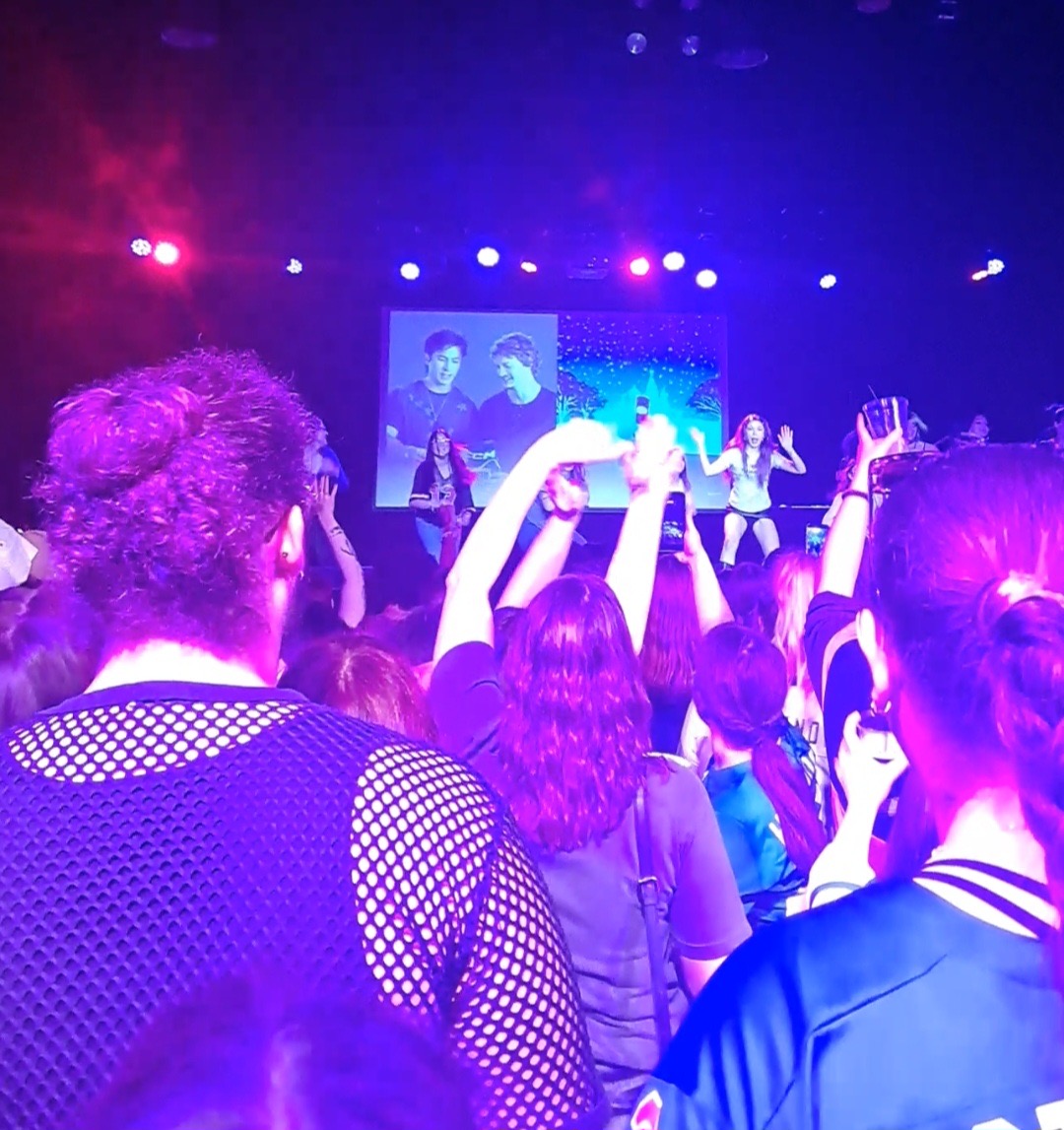
Now, I would also like to mention that I had the opportunity to participate in the phenomenon of “Heated Rivalry Raves” (themed parties) that sparked shortly after the series rose in popularity.

actors Connor Storrie and Hudson Williams edited to the song
“Young and Beautiful” by Lana del Rey

“I’ll Believe in Anything,”
that was part of another
TikTok edit
On February 14th, I went to St. Louis, Missouri with a friend of mine and experienced an exhilarating night of dancing and singing (and crying) while watching TikTok edits of Heated Rivalry, Young Royals, and Heartstopper (other fairly recent and relevant queer series) on a large projector screen. It was immensely fulfilling to see the ocean of people around me enjoy and celebrate the images and clips of the different shows, constantly cheering as a new edit to a popular song appeared on the screen before us.
The Heated Rivalry Rave made me reflect even more on what it means to have positively represented queer relationships. Obviously, the line between genuine enjoyment and appreciation of LGBTQIA+ media and self-serving consumption for the sake of fetishization can be rather thin, but that night, I chose to believe that every single person on that dance floor celebrated the same thing me and my friend did: the uncertain, yet joyful experience of navigating queer romance. It is a complex conversation and, obviously, the popularity of Heated Rivalry did not defeat homophobia here or anywhere else, but it did spotlight harmful behaviors within the community of professional athletes, and even encouraged athletes to come out! It also started a conversation about the frequent mainstream fetishization of members of the LGBTQIA+ community, which has made a lot of people who benefit from it extremely uncomfortable… so something is being done correctly. This kind of discomfort is a wonderful thing as it may bring meaningful change (or at least that is what I hope)!




Leave a Reply