
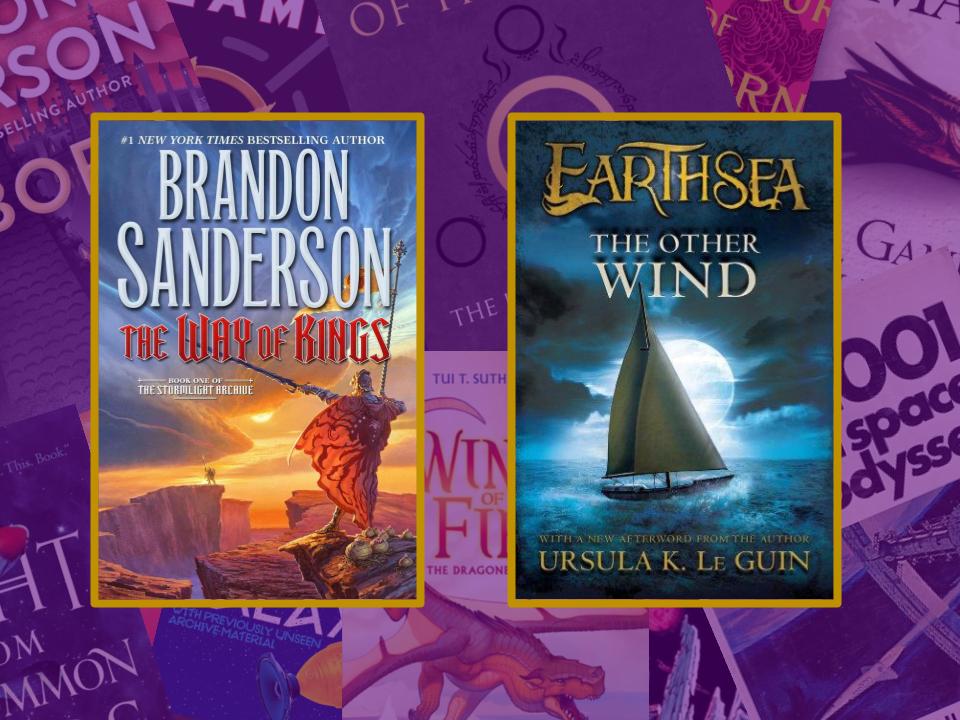
While I’ve always enjoyed and sought after literary fiction, fantasy novels have historically been my go-to. Whenever I needed something to read, it was always something with worlds beyond imagination, deep systems of magic, and fantastic creatures and beings. In the past year, this has changed and I now find myself reaching for a work of literary fiction over anything else. This change has occurred gradually, but this summer I read Brandon Sanderson’s The Way of Kings, and it really cemented this change for me. For what it’s worth, I would describe The Way of Kings as a decent enough novel, though far from being anything spectacular. What is most important to me about The Way of Kings is the way it accentuates the inherent problem of genre fiction, in which the contents of the genre are often put above the work itself.
What do I mean by this? Much of genre fiction exists as a response to one notable work or success. Many publishers and writers look at the success of a given work and attempt to repackage many of its ideas and contents in order to have their hands on an audience-loved best-seller. In the case of fantasy, that work is Tolkien’s Middle-Earth novels. With them, Tolkien reinvented what fantasy could look like. As much as fantasy can depict worlds beyond imagination, Tolkien proved that fantasy worlds can be more grounded, with extensive history, culture, and conflict. Fantasy can also be a complete indulgence in scale and grandeur, previously only found in epic poetry such as Beowulf.
I would describe the themes listed above as the lessons that most fantasy authors took from Tolkien; your fantasy novels should feature immensely detailed worlds with pages upon pages of history, whether hidden or visible to readers, and they must have a lavish scale, fitting for their epic inspiration. To a certain extent, this is fine. It is a given that works of a particular genre will take influence from other works of the same genre. I would even go so far as to say that I like some genre elements that Tolkien popularized. The problem comes when these standardizations (as I might refer to them) begin to take precedence over the work existing as literature or art.
The Way of Kings is a perfect example of this, as, when writing it, Brandon Sanderson seemed committed to fulfilling this list of fantasy “must-haves” over anything else. The conflicts of his storyworld are massive, but the human elements of the novel get lost as a result. In his dedication to the content of the novel, Sanderson falls short stylistically and produces prose that comes off as unartistic and dull. The book is also much longer than it needs to be, and ultimately it just keeps dragging on and on over the course a thousand pages, resulting in what I might describe as the longest prologue I’ve ever read; if anything, this is what I find most egregious about The Way of Kings. On its own, it’s a perfectly inoffensive fantasy book, but at the scale it exists at, the problems I can normally look past in other fantasy novels become utterly tiresome.
I come to the conclusion that Sanderson’s failings with the novel are because The Way of Kings is a work of epic fantasy. All of the novel’s major flaws that I have listed out are due, in part, to Sanderson’s desire to give fantasy readers a finished checklist of everything that supposedly made Tolkien’s work great. I must reiterate that I don’t entirely dislike The Way of Kings, and I don’t dislike Brandon Sanderson as a writer. There are elements of the book that I do find to be engaging and inspired, such as the complex and intricate world-building. That cannot detract from the fact that reading The Way of Kings was a deeply frustrating experience for me. Too many times while reading, I felt that I was wasting my time and that there were countless other authors waiting for me who worked outside the bounds of genre. As a result, I largely avoided genre novels for the rest of the summer, as The Way of Kings had burnt me out so much.
With all of this said, I don’t want to write off genre fiction entirely. There was one other genre novel I read during the summer, being the final book in Ursula K. LeGuin’s Earthsea series, The Other Wind. While I had mostly written genre fiction off by the time I read The Other Wind, I had read the previous Earthsea books earlier in the year and wanted to at least have closure with the series. In reading The Other Wind, I remembered why genre fiction can be great.
LeGuin’s writing within the Earthsea series is inspired. Sure, there are fantasy staples, such as dragons and grand-scale adventures in worlds with meticulous thought and detail, but they never come at the expense of the novel’s existence as literature. The prose in the series is beautiful and flowing, and at the core of each Earthsea book is a deep and meaningful study of the human experience. Whether it be Ged’s journey of self-acceptance in A Wizard of Earthsea, or Tenar’s struggle at navigating a patriarchal world as an aging widow in Tehanu, there is so much humanity to be found in the books of Earthsea.
In the afterword of the 2012 printing of A Wizard of Earthsea, Ursula K. LeGuin writes:
“Fantasy as an assembly-line commodity leaves me cold. But I rejoice when I see it written as what it always was—literature—and recognized as such.”
I feel as if this quote summarizes my confliction with genre fiction very well. Genre can be a powerful tool when wielded by an impassioned creator with a desire to create truly exceptional art. However, when the desire towards creating art gets lost in a series of commercial goals and ideals, it can easily become sterile and uninteresting. It’s not that I think writers of fantasy and other fields of genre, such as Brandon Sanderson, are ill-intentioned with their writing; beneath all of its flaws, I saw a novel with great care put into it when I read The Way of Kings. I just wish more authors of genre fiction could take a leap beyond the bounds of pulp and create something truly meaningful, as LeGuin did with her Earthsea series: something in which the art of literature is valued beyond anything else.
Edited by Karissa L Geisinger



Leave a Reply